

Prefab Homes in Canada: Offices, Pods, Baths & More
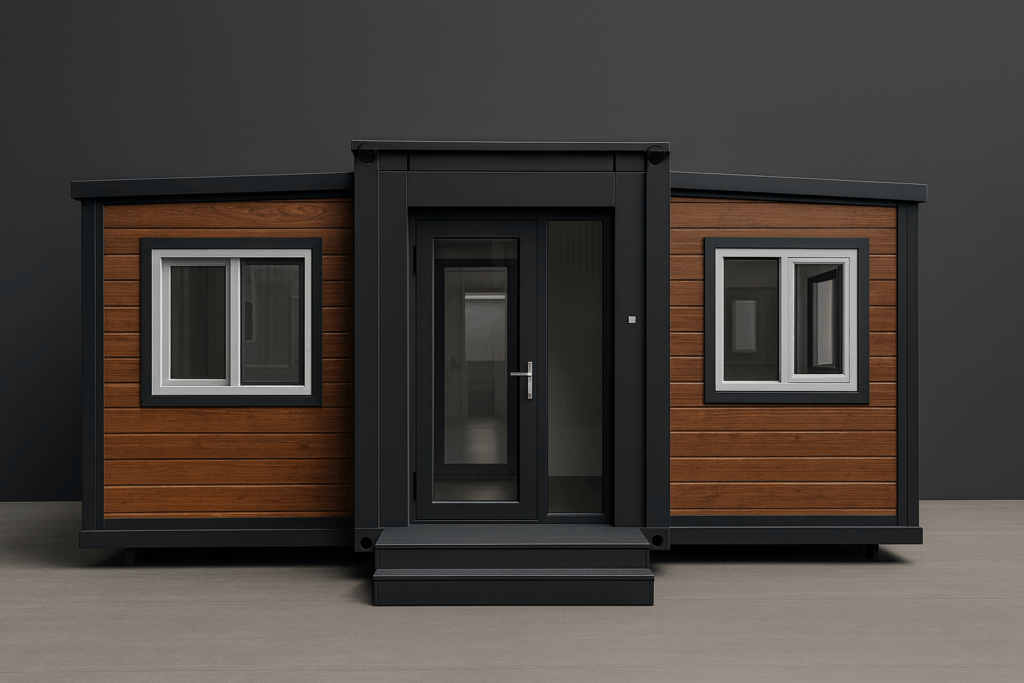
Across Canada, a new wave of tiny prefab homes, portable offices, and studio pods is slipping quietly into backyards, job sites and rural properties. These aren’t rustic tiny houses or DIY garden sheds. They’re clean, modern prefab office pods, rounded studio pods, expandable micro homes, and prefab bathroom pods built in controlled factories and shipped ready to use.
The result is a category that sits somewhere between “housing solution” and “consumer product,” and it’s quickly becoming one of the fastest-growing segments in the modular building world.
Where the trend started
The modern prefab pod movement began overseas. For years, countries like Japan, China, Germany and the Netherlands relied on compact modular units for construction camps, military bases, and disaster relief. These included:
- steel-frame portable offices
- fold-out modular rooms
- fiberglass studio pods
- self-contained prefab washroom units
Once manufacturers refined the insulation, materials and design, these industrial units evolved into residential-grade prefab studios, and they began entering the Canadian market.
Toronto-based backyard office companies now sell all-weather pods starting around CAD 10,500, while Canadian manufacturers like Fort Modular and BOXX Modular report that modular buildings can reduce on-site construction time by 30–50%. Bathroom-pod manufacturers in New Brunswick now ship fully built modules with plumbing and electrical pre-installed.
Canada reached a tipping point: housing shortages + remote work + construction inflation = the perfect environment for micro-prefab adoption.
Why Canadians are choosing prefab office pods & studio pods
The research shows five consistent drivers:
1. Fast installation
Modular buildings allow factories to build the pod while the property owner prepares the site. A prefab office pod or backyard studio pod can be delivered and installed in a single day.
2. Predictable pricing
Compared to traditional construction costs, often CAD450 – CAD650 per sq ft, prefab units offer fixed pricing. Bathroom pods, shower units and modular offices also eliminate labour duplication by assembling everything off-site.
3. High-quality factory finish
Manufacturers like ModularPods pre-test plumbing and electrical inside the factory, something on-site crews rarely do with the same precision.
4. Minimal disruption to property
Prefab office pods, micro homes, and washroom units arrive finished. No months of noise. No long contractor schedules. Just delivery, placement, and connection.
5. Aesthetic upgrade over “container homes”
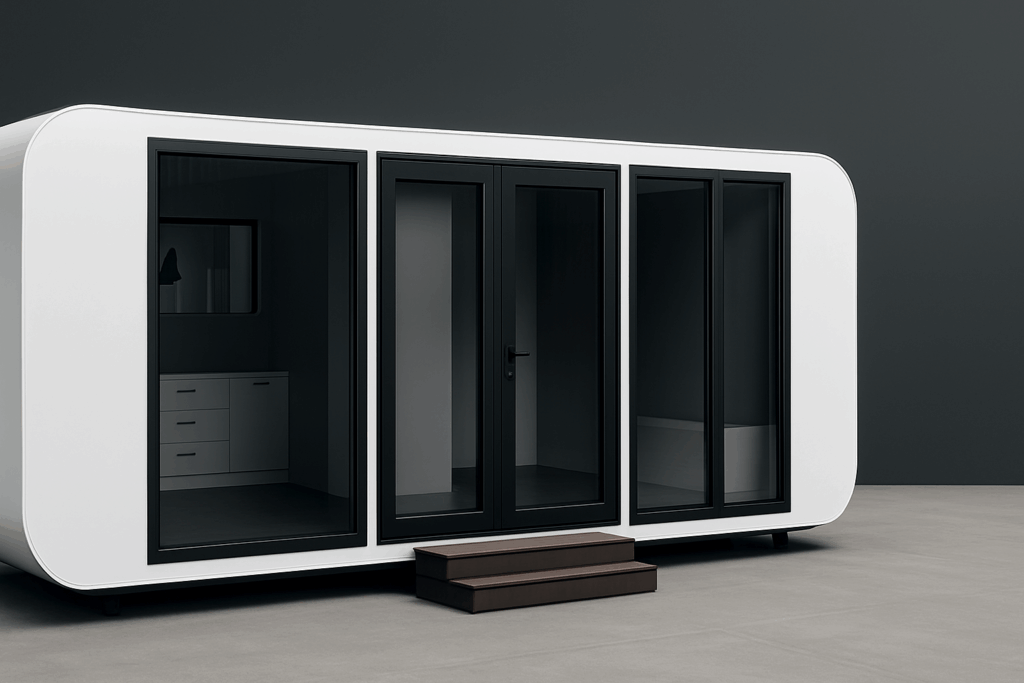
The structures in your photos, rounded edges, high-gloss panels, and framed glass doors, represent a new era of modern prefab studio pods. They look more like mini apartments than job-site boxes.
Why some buyers hesitate
Despite the benefits, buyers should understand the fine print:
- Site prep and trenching can raise total cost
- Not all imported pods meet Canadian CSA electrical standards
- Some units are not insulated for harsh winters
- Zoning determines whether a pod is an office or an ADU (Accessory Dwelling Unit)
- Financing is limited for portable structures
The pod is easy. The land is the real challenge.
Permits & legality across Canada
Prefab units with plumbing = building permit required
Prefab bathroom pods and shower units must comply with the National Building Code and pass provincial and municipal plumbing inspections.
Living space triggers residential zoning
If a prefab pod is used as a rental suite or tiny prefab home, it usually becomes an ADU. That means:
- building permit
- foundation or anchors
- electrical inspection
- heating/ventilation rules
- CSA certification (Z240, Z241, or A277 depending on type)
Electrical hookup requires CSA certification
Imported pods with wiring installed must either:
- be built under CSA A277, or
- be inspected and approved by the provincial authority
Electricians cannot connect non-certified prefab pods.
Temporary buildings face fewer obstacles
Portable offices, modular washrooms with holding tanks, and job-site buildings often avoid full permitting, as long as they are not permanent dwellings.
The future of prefab micro homes in Canada
With housing shortages intensifying and remote work here to stay, tiny prefab homes, studio pods, and portable modular offices are becoming part of Canada’s long-term housing and workspace ecosystem.
The next wave will include:
- insulated four-season micro homes
- expandable prefab living units
- plug-and-play rental suites
- modular backyard office compounds
- standalone washroom clusters for rural properties
These are not fads. They’re fast, efficient, modern building solutions for a country where traditional construction simply can’t meet demand.


Add a review
Your email address will not be published. Required fields are marked *